
Service Center
Contacts
Mr.Yang
+86-13510169982
Mr.Du
+86-18682407890
Ms. Cheng
+86-17856285267
E-mail:
ywei@boulder.com.cn
duzp@boulder.com.cn
bd_sales02@boulder.com.cn
Service Center
Essential Parameters for Inductor Design
2025-09-11 09:51:16
Click:
I. An inductor is a component capable of converting electrical energy into magnetic energy and storing it. The structure of an inductor is similar to that of a transformer but with only one winding. An inductor possesses a certain inductance, which impedes changes in current. If the inductor is in a state with no current flow when the circuit is connected, it will attempt to阻止 the flow of current through it. If the inductor is in a state with current flow when the circuit is disconnected, it will attempt to maintain the current unchanged. Inductors are also known as chokes, reactors, or dynamic reactors.
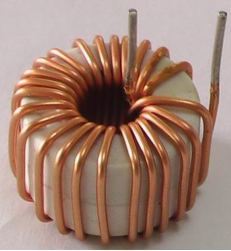
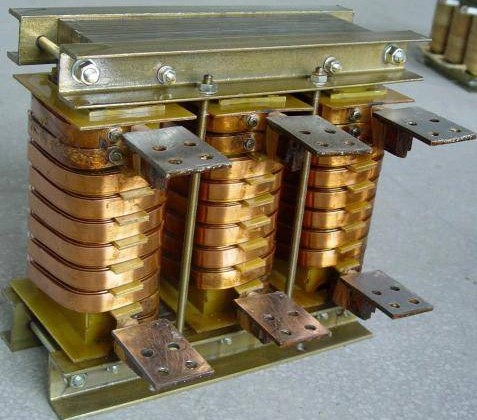
II. Traditionally, inductors generally consist of a bobbin, winding, shielding cover, packaging material, magnetic core, or iron core.
- Bobbin: The bobbin generally refers to the bracket used for winding the coil. Larger fixed
inductors or adjustable inductors (such as oscillation coils and choke
coils) are typically made by winding enameled wire (or yarn-covered
wire) around a bobbin, and then inserting a magnetic core, copper core,
or iron core into the inner cavity of the bobbin to increase the
inductance. The bobbin is usually made of plastic, bakelite, or ceramic
and can be shaped as needed. Small inductors (e.g., color-code
inductors) generally do not use a bobbin and instead directly wind the
enameled wire around the magnetic core. Air-core inductors (also known
as air-core coils, often used in high-frequency circuits) do not use a
magnetic core, bobbin, or shielding cover. Instead, they are wound on a
mold and then removed from the mold, with the coils spaced a certain
distance apart.
- Winding:
The winding refers to a set of coils with specified functions and is
the basic component of an inductor. Windings can be single-layer or
multi-layer. Single-layer windings can be closely wound (with wires
wound side by side) or spaced wound (with a certain distance between
each turn of wire). Multi-layer windings include layered parallel
winding, random winding, and honeycomb winding, among others.
- Magnetic Core and Magnetic Rod:
Magnetic cores and rods are generally made of materials such as
nickel-zinc ferrite (NX series) or manganese-zinc ferrite (MX series).
They come in various shapes, including 'I'-shaped, cylindrical,
cap-shaped, 'E'-shaped, and pot-shaped.
- Iron Core: Iron core materials mainly include silicon steel sheets and permalloy, with 'E'-shaped being the most common form.
- Shielding Cover:
To prevent the magnetic field generated by some inductors during
operation from affecting other circuits and components, a metal
shielding cover is added (e.g., the oscillation coil in a semiconductor
radio). The use of a shielding cover increases the loss of the coil and
reduces the Q value.
- Packaging Material:
Some inductors (e.g., color-code inductors and color-ring inductors)
are sealed with packaging materials after winding. Packaging materials
typically include plastic or epoxy resin.
III. Inductor Classification
Based on the function of inductors in circuits, commonly used inductors can be categorized as follows:
- Input/Output Common-Mode Inductor:
Used for common-mode suppression and filtering high-frequency
interference harmonics. The core is made of high-permeability material.
- Input/Output Differential-Mode Inductor:
Used for differential-mode suppression and filtering high-frequency
interference harmonics. The core is made of power-type material.
- PFC (Power Factor Correction) Inductor: Used for power factor adjustment. It is a power device, and the core is selected from power core types.
- Resonant Inductor: Used in LLC resonant circuits. It is a power device, and the core is selected from power core types.
- Input/Output Buck and Smoothing Filter Inductor:
Used for step-up/step-down and smoothing filtering functions. It is a
power device, and the core is selected from power core types.
- Filter Inductor in High-Frequency Circuits:
Used for filtering high-frequency noise in various control boards. It
is a power device, and the core is selected from power core types.
| Inductor Type | Parameter |
|---|---|
| Common-mode inductor,Differential-mode inductor, PFC inductor,Boost/Buck inductor,Output power inductor, Lightning protection inductor | Three-phase common-mode |
| Operating voltage rating/peak | 600V |
| Operating current rating/peak, temperature rise current, saturation current for power inductors | 120A |
| Operating frequency | 45 kHz |
| Inductance | Above 200 μH |
| Dimensions: LWH | 110*75*45 mm |
| Lead-out method: Flying leads, Pin insertion or SMD, With hardware structural parts, Aluminum or plastic case potting | |
| Cooling method: Natural cooling/air cooling/water cooling, Potting |
Author:
BOULDER ELECTRONIC (VIETNAM) CO., LTD







Top

点击右上角
分享给朋友吧
National service hotline
+86-755-61589888
If you wish to know more about our products, please contact our service hotline.
Copyright ©2025 All Rights Reserved Boulder Electronics Co., LTD., Guangdong ICP No. 17097034